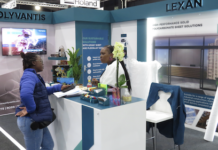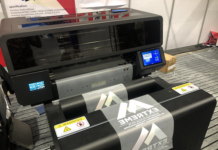
According to Ilisna Lane, sales manager at NUtec Digital Ink, digital embellishments have become increasingly popular over the past few years, and even more so recently in the world of UV-curable printing. Anyone who attended the recent Sign Africa and FESPA Africa Expo in 8–10 September would have noticed the prominence of UV printing showcased, with printing onto many different substrates, each with its own unique features and possibilities.
UV printing is no longer only impressive because we can print onto unusual substrates. The next question is: what else can we do with a printed surface?
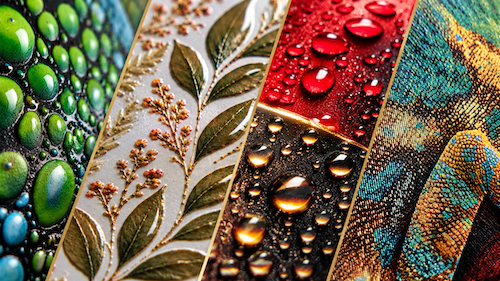
By combining traditional CMYK with white and clear inks, and building multiple layers of ink, we can do so much more than simply print an image. Raised effects, spot varnishes, gloss and matte contrasts, and textured finishes can add another dimension to an already eye-catching graphic, creating something that not only looks different but feels different too.
This is where digital embellishment becomes interesting. Digital embellishments can be done in many different ways, including foil, raised varnishes, spot varnishes, textured finishes and 3D effects. Let’s face it, touch is one of our five senses, so why should print only be about what we see? The way a print feels can completely change the experience of the finished product.
This becomes especially interesting in retail and packaging, where the first thing a consumer often notices is what a product looks like. Adding textured, raised, metallic or foiled areas gives brands another way to attract attention and make their product stand out from the one next to it on the shelf.
Following one of my previous articles about ink adhesion, there is also a natural technical link to digital embellishment. Once we start putting down more ink, building multiple layers, adding clear coats and creating raised textures, adhesion and performance become even more important.
Creating the effect is only half the challenge. Making sure it stays attached to the substrate is the other half. Embellishment is moving beyond simply making a print look different. It can change how a printed product is seen, touched and ultimately valued.
The possibilities stretch from signage and UV wide-format printing into packaging, labels, DTF and apparel, décor and many other applications. Giving a print that 3D or tactile effect allows PSPs to offer their customers something different and create unique solutions rather than simply selling another printed graphic.
Another interesting development is the use of jettable primers or adhesives for digital foiling. Instead of applying foil across the entire graphic, the primer or adhesive can be digitally printed only where the foil is needed. The graphic can then be passed through a laminator with the foil, where the foil sticks only to the printed areas. The excess foil is removed, leaving behind a beautiful metallic effect exactly where you want it.
What Is the Advantage for the Converter or PSP Offering These Solutions?
Offering embellishment options allows a PSP to move away from simply selling square metres of print and there is a shift towards selling a premium finished product. This becomes especially important in a market where customers can easily start comparing printers based purely on price per square metre.
Digital embellishment creates a different conversation with the customer. Instead of only asking, ‘What do you want printed?’, we can start asking, ‘What do you want your customer to experience when they see and touch it?’. This gives PSPs the opportunity to offer something different, add more value to the finished product and potentially achieve better margins.
Types of Embellishments Available in the World of Printing
UV / Wide-format printing: Raised clear ink, gloss and matte contrasts, spot varnish, textured finishes, multilayer printing, simulated embossing, 3D effects and combinations of white, colour and clear ink, the possibilities continue to grow.
White ink can be used as an underprint or overprint, while clear ink can be built up in multiple layers to create height and texture. Braille printing using digital inkjet technology has also become something offered by a number of PSPs, showing that raised inkjet printing can be used for more than just creating a visual effect.
Packaging and labels: This is an industry that adopted embellishment long before it became such a big talking point in wide-format printing. Digital foiling, metallic effects, spot varnish, raised varnish, embossing and debossing effects, and short-run personalised embellishment can all change the look and feel of packaging.
Even a fairly ordinary substrate can suddenly look and feel far more premium through the clever use of texture, gloss, metallic effects and raised areas.
Clothing and apparel: As we move further into the DTF era, the garment heat-transfer market has been offering metallic films, glitter, reflective effects, glow effects, flock or velvet-like finishes, puff and 3D effects, and other speciality transfer films for many years.
Touch becomes even more interesting in this market because the print is physically worn and handled. We are now seeing similar options becoming available in DTF, with more speciality films and media allowing printers to offer something beyond a traditional printed transfer.
Decorative wall applications: Companies such as Avery Dennison Graphics Solutions and HEXIS S.A.S. Graphics continue to offer solutions that go beyond conventional printed wall graphics. Textured finishes and films that create the look and feel of materials such as wood, stone, brushed materials and leather are opening interesting opportunities in retail, hospitality, offices and home décor and many other application driven opportunities.
These applications also show that embellishment doesn’t always mean adding something on top of a printed graphic. Sometimes the substrate or film itself can become part of the overall effect.
From an Ink Perspective
Adding more layers can create more height and stronger tactile effects, but at what point does the extra ink start to affect curing, adhesion, flexibility, production speed and ultimately cost?
When we start building multiple layers of UV ink or clear varnish, we also need to think about how well those layers stick to each other. Ink-to-substrate adhesion is important, but so is adhesion between all the additional layers.
We also need to think about what will happen to the finished print. Will it remain flat? Will it be rolled, folded, cut, routed or handled regularly? A beautiful, raised effect means very little if it becomes brittle, starts cracking or separates from the substrate during finishing or use.
Curing also becomes more important as we start building up these layers. More ink doesn’t automatically mean a better embellishment. The thickness of each layer, UV energy, curing between layers, registration and the flexibility of the finished ink film all need to be considered.
This is where digital embellishment becomes much more than simply creating a special effect. It becomes about understanding the ink, the printer, the substrate, the design and, most importantly, the final application. How are you using digital embellishments in your business?
C1W Initiative
Change 1 Woman (C1W) aims to empower women in the branding, print and signage industries. As part of this initiative, Sign Africa would like to spotlight women-focused content like this piece. If you have any trend/business articles related to the signage, branding and printing industries, please email content to: info@c1w.co.za. Follow C1W on Facebook and LinkedIn for more updates.
CHANGE ONE WOMAN
https://www.c1w.co.za/get-involved/
| MANUFACTURER NUTEC DIGITAL INK Tel: +27 21 763 6990 Email: info@nutecdigital.com Website: http://www.nutecdigital.com  |