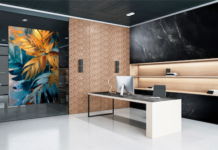
Mark Snellings, owner at Hasco Graphics, and writing for Drytac, outlines the value of adding texture in wall graphic applications. Walk through almost any retail space, hotel, office, or branded environment today and you will see wall graphics everywhere. But while the visuals may be impactful, many still share the same limitation: they look like printed graphics applied to a wall.
That is where textured and embossed print media changes the conversation. Just like traditional wallpaper, embossed vinyl adds a physical feeling to a printed image, helping transform graphics from something you simply look at into something you experience. It creates depth, realism, and a more premium appearance without significantly increasing production complexity or cost.
Moving Beyond Flat Graphics
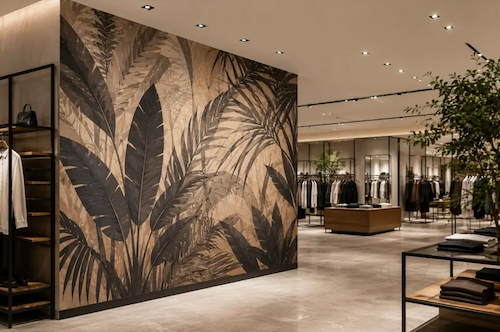
Flat white print media absolutely has its place. It is versatile, reliable, and widely used across the industry. But embossed media offers a completely different look and feel. Subtle textures can enhance the realism of printed imagery and help graphics better connect with the products or environments they represent.
For example, imagine a retail client selling denim apparel. Printing a wall wrap featuring jeans on smooth white media still looks like a printed graphic. But print that same artwork onto a textured media, such as a linen-embossed film, and suddenly the graphic begins to visually resemble real fabric itself. That added texture creates a more immersive and premium result.
A Premium Look Without Premium Complexity
One of the biggest advantages of embossed wall graphic media is that it typically requires very little change to existing workflows. The media prints and installs similarly to standard wall vinyl and does not require additional technical ability from production or installation teams.
In many cases, the cost difference between smooth and embossed media is also relatively small, allowing printers and installers to offer textured graphics as a value-added upgrade with stronger perceived value for the end user.
Texture Can Help Eliminate Lamination
Another major advantage is durability. Many embossed wall graphic films are thicker than standard smooth media, meaning lamination is often not required for interior wall applications. This can help reduce production time, simplify finishing, and lower overall material usage.
The added thickness can also help hide minor wall imperfections and create a more forgiving installation experience across large wall areas.
Creating More Memorable Spaces
Interior graphics are about more than decoration, brands want spaces that feel immersive, intentional, and memorable. Whether replicating canvas, linen, or sand finishes, textured wall graphic media helps create environments that feel more authentic and engaging.
Texture changes how people experience a wall graphic. And often, that difference is what helps graphics feel less like printed vinyl and more like part of the environment itself.
MIDCOMP
+27 10 020 9999
consumables@midcomp.co.za
www.midcomp.co.za